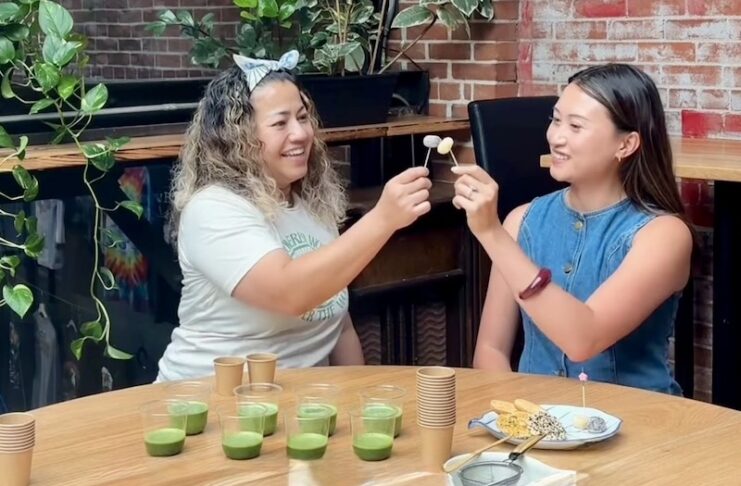
In a city fueled by artisan coffee and craft beer, a new kind of ritual is quietly taking root. At BrewCHA Tea Lounge in Colorado Springs, the focus isn’t on getting your caffeine as fast as possible. It’s about slowing down long enough to notice what’s in your cup.
Owned and run by Fatima Concepcion, a trained tea sommelier, BrewCHA is the Springs’ first true specialty matcha bar. And it has leveled up what matcha can be in Southern Colorado. Don’t want to take our word for it? Ask local matcha educator Dai Wong, who also created the Instagram account @thematchamix.
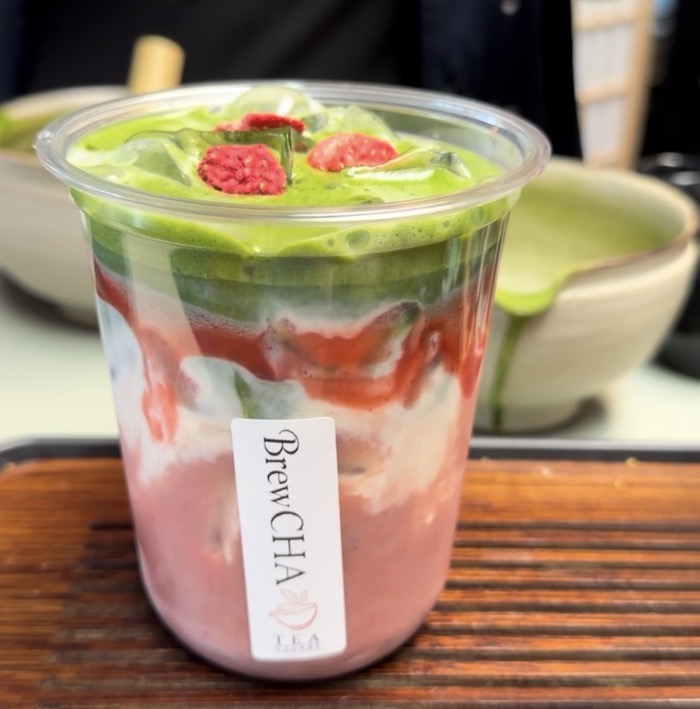
When I meet Dai at BrewCHA, she arrives in a flowing blue dress with a warm smile and the patient expertise of someone who knows matcha inside and out. She orders the Jasmine Matcha Cloud, while I go for the shop’s signature Strawberry Matcha. The first sip is perfection: The bright, sweet strawberry hits first, then gives way to the earthy, nuanced matcha underneath. The drink is perfectly balanced, not too sweet, not too bitter.
“I believe BrewCHA is the only specialty matcha place that’s here in the Springs,”
Dai says. Located inside the COATI food hall at 514 S. Tejon St., the shop serves thoughtfully crafted drinks made with high-quality, shade-grown matcha sourced with care. Before opening this lounge earlier this summer, BrewCHA began as a food truck, slowly building a devoted following before planting roots downtown.
What to Know About Matcha
For many Americans, the matcha story starts at Starbucks — they think of it as a sweet, milky green drink that’s more comfort than craft. Dai’s journey was similar, until a trip to Japan shifted her perspective.
“We went to this unassuming donut shop,” she says. “I took a sip of this matcha latte, and I was like, ‘I’ve never had matcha like this before. This is like nothing I’ve ever had back in the States.’”
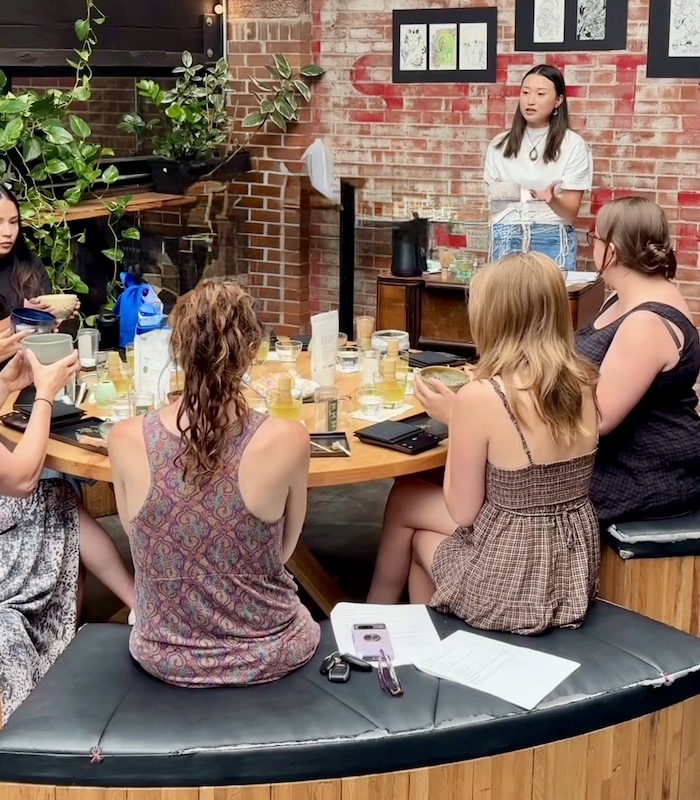
That single cup sent her down a rabbit hole of Japanese cafes, TikTok recipes and serious experimentation. Today, she shares that knowledge through monthly classes at BrewCHA.
“Everyone really wants to learn the skill of it. I think people are genuinely very curious, and they just want to know more,” Dai says.
One of the first myths she tackles in her workshops is the phrase splashed across countless tins and cafe menus: “ceremonial grade.”
“The biggest mistake that people will make when it comes to matcha is seeing something branded as ceremonial matcha, and then just going off of that and picking that as high quality,” Dai says. “That’s the biggest myth with matcha because it’s not regulated in any way.”
Quality starts with color. “The best way that you can find if a matcha is good or not is noticing how green it is. So green is a very, very big indicator,” she says.
A vibrant green often points to carefully grown and processed leaves, particularly those from the first harvest, when they’re picked at their peak. From there, processing matters, and high-quality matcha is slowly stone-milled to keep the leaves from overheating, which can dull the flavor and introduce bitterness.
That kind of detail is exactly where BrewCHA and Fatima shine. As a tea sommelier, she doesn’t just choose “a good matcha.” She chooses specific cultivars,varieties of tea plant, to match each drink.
“She really is taste testing each and every kind of matcha, figuring out which cultivar will pair with a certain drink, or if you want a floral drink to go with this flavor or whatnot,” Dai explains. “She really wants people to get to the root of the flavor.”
Beyond the Beverage
Underneath all the talk of color, cultivars and stone mills is something quieter: a philosophy of how to move through the world.
Matcha, as practiced in Japan, is rooted in respect, harmony and presence.
“The idea of a tea ceremony was that no matter what rank you were, no matter what status you were, everyone in that room is equal to each other and should receive the same amount of respect,” Dai says.
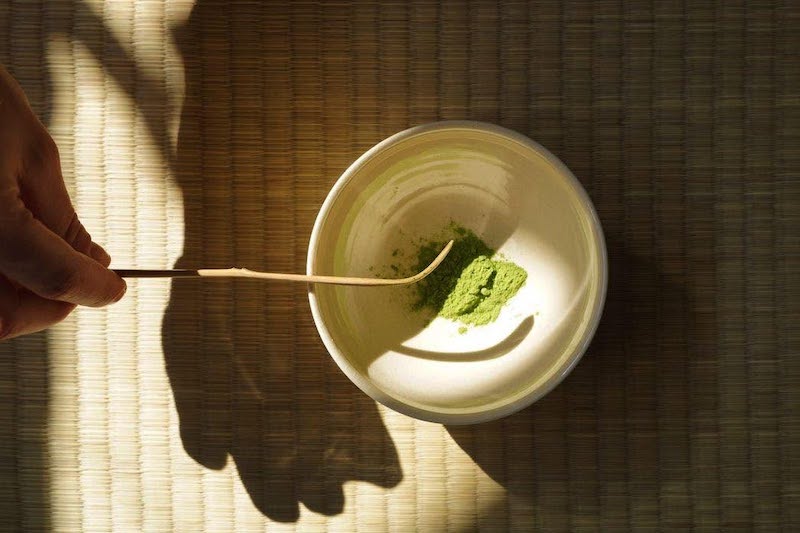
Every gesture, the angle of the water ladle, the way the bowl is turned to show its most beautiful side to the guest is intentional. That same precision lives behind the bar at BrewCHA.
Fatima was busy running the shop during my visit, moving between customers and the demands of the bar, so Dai offered a glimpse into what the ritual means to her.
For Fatima, the act of whisking isn’t just technique; it’s therapy.
“She’ll tell you that when she whisks, her whole brain shuts down, and that’s all that she’s focusing on,” Dai says. “She has ADHD, and she says when she gets to do this, it’s the one time in her day where everything is all full focus on the tea.”
In a Western culture obsessed with speed, productivity, and notifications, BrewCHA offers a small rebellion: a practice built on slowness and intention.
“It’s meant to be that calm moment, especially in your morning,” Dai says. “Before you go to work, if you just take the time to make a matcha before you go, it’s that moment where you get to just sit and be present with the process.”
Making Matcha Your Own
Matcha is having a moment. Social media feeds are full of pastel green lattes, and matcha pop‑ups are appearing from Denver to New York. Dai traces the boom to increased travel to Japan and a growing awareness that what many Americans thought was “matcha” was only one, heavily sweetened version.
But for all its trendiness, matcha’s appeal goes deeper than aesthetics. Along with caffeine levels comparable to a latte, it carries L‑theanine, an amino acid linked to calm, sustained focus.
“With coffee you get that high and then you crash right after,” Dai explains. “With matcha, it’s sustained throughout the day, and it creates a calming effect. It’s not meant to make you feel jittery at all.”
Like anything, she goes on, it should be consumed in moderation and with food, but its combination of alertness and tranquility makes it a compelling alternative to the midmorning coffee crash.
Perhaps the most refreshing thing about BrewCHA’s approach is that, for all the reverence for tradition, there’s no snobbery. Dai sees plenty of “matcha elitists” online questioning whether you truly love matcha if you drink it with cream tops, sugar or fruit.
She, and BrewCHA, reject that idea. “The beauty of matcha is that it can be consumed in so many ways,” she says. “However you like to consume it is the correct way. You’ll have your own special connection with it. Don’t listen to what everyone says, just enjoy it, however you like it and what makes you happy, because that’s the point of it.”
At BrewCHA Tea Lounge, that philosophy shows up in every carefully whisked bowl and every welcoming interaction: matcha done with respect for its roots, and room for you to make it your own.
Find more about BrewCHA at @brewcha.tealounge.