

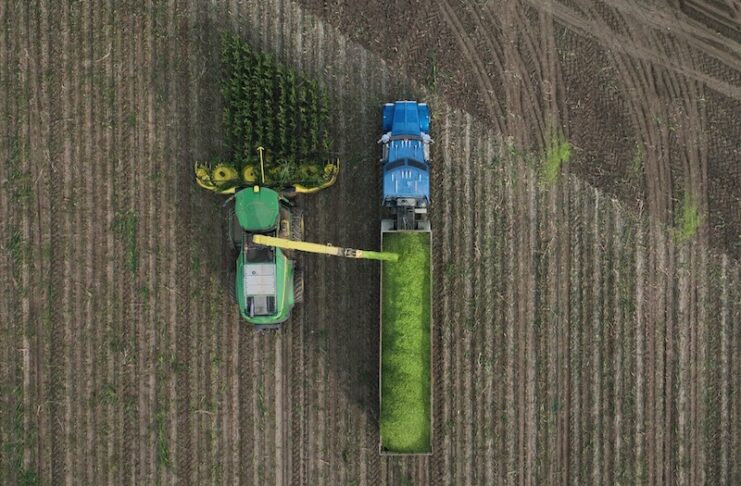
It was the moment he knew they had a film. Dillon O’Hare was driving along a rural highway through the agricultural lands east of Pueblo. In the pickup truck ahead, he could see Mike Bartolo and Ben Knight. Bartolo drove but his hands waved demonstrably as he pointed out family farms, irrigation ditches, crop growth. The retired Ph.D. research scientist and widely credited developer of the legendary Pueblo Chile was in his element. And as a third-generation farmer in the Arkansas River Valley, no one knows the land better than Bartolo. O’Hare knew the award-winning filmmaker Knight would be hooked.
“I was like, Mike’s doing it right now. He’s pulling back the curtain and showing why this area and story are so special,” says O’Hare, senior conservation manager for the Palmer Land Conservancy.
The eventual result was Mirasol, Looking at the Sun a gorgeous film about water, land and a rapidly disappearing agricultural way of life. On a deeper level, Mirasol is the story of multigenerational farming families on The Mesa, just southeast of Pueblo. And on a broader level, it is the story of the American West’s relationship to its land and water and the priorities we value as a society.
“The more time I spent out in the fields, family kitchens and digging into archives — the more I started to realize how incredibly vulnerable and precious this sliver of irrigated mesa is,” says Knight, the film’s director. “Before long it became my mission to tell a story that’s all too common in agriculture: We are taking these places and these people for granted.”
Finding a Master Storyteller
Ben Knight knows filmmaking. You might recognize him as the director of DamNation, Patagonia’s first feature-length documentary in 2014 that brought widespread attention to the movement for dam removal on American rivers. Or you might have seen some of his other adventure and environmental films with sponsors like The North Face and National Geographic and premieres at SXSW, Banff Mountain Film Festival and Telluride’s Mountainfilm. It was there at Mountainfilm that Knight worked projectors and found his initial filmmaking inspiration after dropping out of high-school in the mid-‘90s.
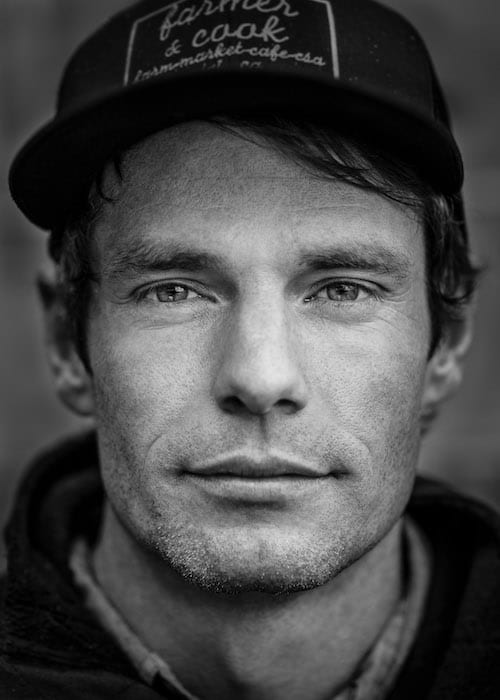
Those kinds of credits are why O’Hare and Kristie Nackord, Palmer Land Conservancy’s vice president, showed up at Desert Reef Hot Springs one night in Florence where Knight was screening one of his films.
For the past nine years, Palmer Land Conservancy has worked alongside Pueblo farmers, residents and community leaders to protect farmland in eastern Pueblo County from an impending dry-up. Based in Colorado Springs, the nonprofit regularly works to conserve land and water in Southern Colorado and find solutions that balance competing water needs of growing cities, thriving agriculture and a healthy environment. But they had seen something special in the Pueblo community. “We knew we needed to go find a storyteller,” O’Hare says.
As a long-time Colorado resident, Knight was living along the Arkansas River in Howard, just outside of Salida and about 80 miles upstream from Pueblo. He had recently become a new father and also had to walk away from a big project that became too overwhelming. Working closer to home was appealing. “It just seemed like this amazing opportunity to learn a lot about my backyard,” Knight says.
Meeting the People of Mirasol
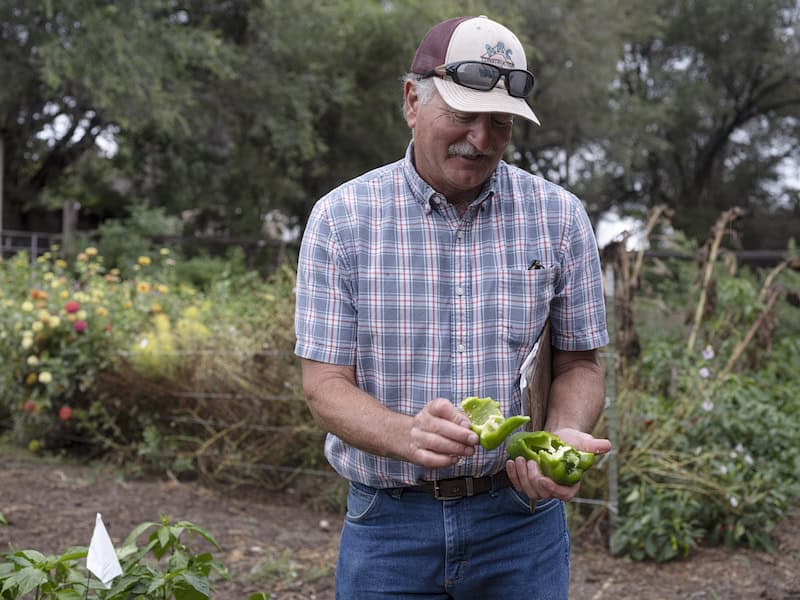
As he began discussing concepts with the Palmer Land Conservancy, he was immediately intrigued to learn about the large wave of Italian and Sicilian immigrants who came to Pueblo in the 1850s. Mike Bartolo’s grandfather was one of those immigrants, and Mike credits the knowledge and seed-saving practices of his grandfather and that era’s fellow farmer that led him to discovering a unique pepper in his own fields one day. After saving and breeding its seeds, Bartolo developed a new pepper he named the Mosco: the hot, flavorful and meaty pepper that was original form of what we know as the Pueblo Chile. In the film, he explains that the pepper is a variety of the mirasol, which traces its genetics to the Oaxaca region of Mexico and that was grown in the Pueblo area in the early 1900s.
As Bartolo took Knight inside his farming and conservation advocacy work, the story of Mirasol began to take shape. Bartolo and O’Hare introduced Knight to farmers, who introduced him to more farmers in the community.
What Mirasol does so beautifully is introduce several of those farming families, taking us into their homes and kitchens and fields and connecting the dots between their heritage, their way of life and the challenges that threaten the water and land that sustains it all.
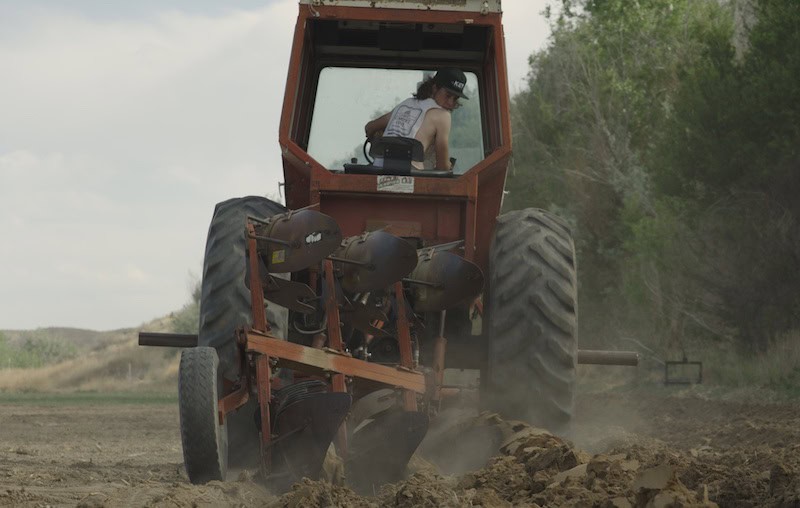
Knight takes viewers inside places like the Williams Family Farm & Seed Store, an absolute throwback. And he introduces us to people like the large, multigenerational Martellaro family in the film.
“They just felt like the truest portrait of that place that I can imagine,” Knight says, explaining that their home felt like the spirit of the community. “We would be in there having water and some Italian cookies that were just being made. Then a grandkid that we hadn’t met would just roll in because it was that kind of home, and they would look at us like, ‘Who are you? But we’re happy you’re here.’ There was just such an openness.”
Conserving the Land and Water
Issues of land and water use are complex, especially in the West. According to the American Farmland Trust, 2,000 acres of agricultural land are lost each day in the United States, mostly to residential development. That trend is easy to see in growing cities up and down Colorado’s Front Range.
“To paraphrase Aldo Leopold, the biggest mistake we can make is assuming that our breakfast comes from the grocery store and our heat from the furnace,” Knight says. “That speaks to the disconnect. And I think that assuming your water comes from the faucet is the same thing. Water literacy is so important, especially in the West.”
Helping people to see the connections between water and land and real human lives was part of the motivation for Palmer Land Conservancy to commission this film.
When I ask what Knight and O’Hare hope people will take away from Mirasol, Knight says, “I just want people to remember not to take these places for granted and remember how special they are — how fragile they are.”
“Caring about something is being aware that it exists, and then you interact with it and you can come to love it,” O’Hare adds. “And then you want to protect it.”
Mirasol gives a beautiful introduction to the agricultural lands of Southern Colorado, and it shows us compelling reasons to protect the land, water and heritage that provides for us so close to home.
Where to See Mirasol
Mirasol, Looking at the Sun made it’s world premiere earlier this year as a selection in the Big Sky Documentary Film Festival, and it has since screened at the 5Point Adventure Film Festival in Carbondale and at the Pueblo Film Festival.
The Palmer Land Conservancy will host its Colorado Springs premiere at a fundraising gala on May 21 at the Ent Center. And other screenings will follow in the Springs and around Colorado through the summer and fall. To get tickets, learn more about the film, find local food providers or get involved in Palmer’s conservation efforts, go to mirasolfilm.com.
For a glimpse inside the culture of the Pueblo Chile, check out our Pueblo Chile & Frijoles Festival Insider’s Guide.


