

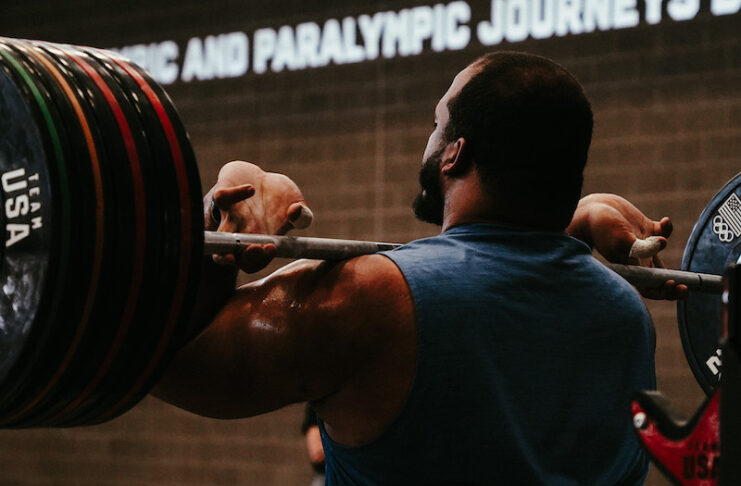
There’s an energy you can feel when you step inside the Colorado Springs Olympic & Paralympic Training Center (CSOPTC). The world-class training venue is the home of Team USA. This is where the best of the best come to sharpen their skills, find their edge and pour in the discipline to achieve their dreams.
But as any world-class athlete will tell you, there is a deeply committed team behind the team that is just as skilled, trained, disciplined and focused on helping these athletes reach the pinnacle of their potential and putting Team USA on the podium.
All that team effort comes together at the Colorado Springs Olympic and Paralympic Training Center. Each year, 8,000 to 10,000 athletes come through the CSOPTC. About 80-100 athletes live there full-time. Some come for the world-class facilities. Others come to connect with and learn from the best team coaches, sports medicine and sports science providers, strength and conditioning coaches, nutrition experts or even operations staff.
You don’t have to be a world-class athlete or coach though to visit the Colorado Springs Olympic & Paralympic Training Center. Everyone is invited. The CSOPTC is open year-round, with tours offered to the public six days a week. There’s a good chance you’ll see Olympic and Paralympic athletes training when you visit — one of them might even lead your tour — but there’s much more to experience.
“Guests who do the tour are going to see a little bit of everything in a 75-minute day-in-a-life experience of our athletes,” says Mike Beagley, Director of Sports Venues and High Performance Centers at the U.S. Olympic and Paralympic Committee (USOPC). “They’re going to see where these athletes train every day, where they recover, where they get extra support, whether it’s medical or science or nutrition. They’re going to see where they eat and where they live. And people will also get to see and learn about the team behind the team and all that it takes to support these athletes in competing at the world’s highest level.”
Here’s a behind-the-scenes preview of what to expect.
Inside the Ted Stevens Sports Services Center
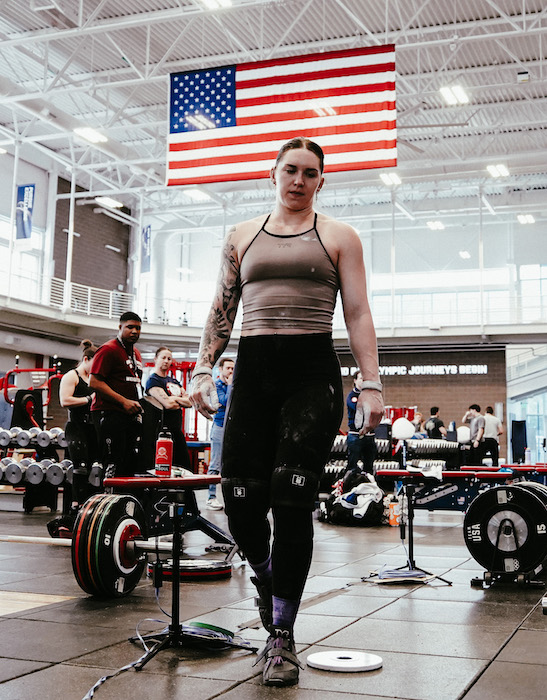
Did you know the U.S. Olympic Committee wasn’t established until 1978? That was thanks to Alaska Senator Ted Stevens, who authored the Amateur Sports Act. That’s why this state-of-the-art facility bears his name and serves as the CSOPTC epicenter for strength and conditioning, sports medicine and sport sciences.
“Many people think it is simply a training facility, but it is really a fully integrated performance environment,” says Chris Baird, USOPC Senior Director of Applied Sciences. “Athletes can access sports medicine, nutrition, recovery and performance science expertise all working together under one roof.”
Superior Strength and Conditioning
The center includes the 30,000-square-foot Strength and Conditioning Center as well as the Sports Medicine Center, the Sport Sciences Center, and the High Altitude Training Center. It’s all designed to help athletes reach their peak performance through sport dietetics, technology, physiology and psychology.
Among its many resources, the Strength and Conditioning Center is home to an impressive 10 tons of free weights. You’re likely to see athletes working out here. While team sessions are common, each athlete’s training is highly individualized.
“Exercises, loads and progressions are adapted to each athlete’s needs, training history, position, injury status and performance goals,” Baird says. “Our teams also work closely across disciplines and departments to ensure the training stimulus is aligned with the desired performance outcomes.”

Real-World Training, Anywhere in the World
As for specific training, the High Altitude Training Center is an impressive spot that can reproduce weather conditions found anywhere in the world, including temperature, humidity, barometric pressure and oxygen saturation. Sea-level high intensity sessions are popular. “This allows them to have the benefit of living high (enhancing oxygen transport) and training low (being able to do the race-specific work they need),” says Dr. Geoff Burns, Sport Physiologist, Paralympic Sport.
Competition simulation is another popular use. “For Olympic and Paralympic Games and World Championships that will be in hot and humid environments, we can simulate this directly so the athletes are best prepared,” Burns says.
For the lead-up to Games in Rio and Tokyo, sessions with sea-level oxygen, 75- to 90-degree temperatures and 60-80% humidity were common. And Burns says the team used even hotter temperatures (90-100 F) preparing for World Championships in Abu Dhabi and Doha.
“This all allows us to do race-specific simulations for the athletes,” he says.
Altering Gravity for Recovery
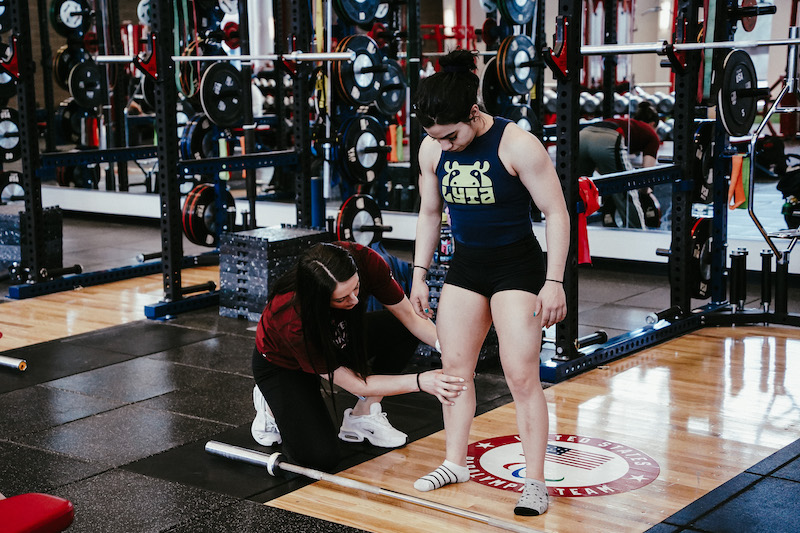
Of course, with intense training and competing come injuries, but the doctors, therapists and providers at the USOPTC are world-class with extensive experience in Olympic and Paralympic sport, says Amber Donaldson, PT, USOPC Vice President, Sports Medicine.
One tool they can use at the CSOPTC is the Alter G, an antigravity machine. “An athlete zips in, the machine blows up, and it can drop an athlete to 20% of their body weight,” Donaldson says. “This helps with unloading due to weight-bearing restrictions or to reduce the overall load on the athlete as they recover from an injury or focus on return to sport.”
For example, an elite runner or basketball player can pedal to maintain their cardio fitness while they recover from an ankle injury or knee surgery.
At the Center of Sports
Guests at the Olympic and Paralympic Training Center also get to see a variety of sports centers. Some gyms and spaces allow staff to convert venues to exact specifications for a wide range of sports. Other centers are more specific, such as boxing and wrestling gyms, the Aquatics Center and the Olympic Shooting Center. It’s here the athletes and teams test themselves in training, practice and competition. Some sports bodies, such as USA Basketball and USA Volleyball, even host national team trials to select their Olympic and Paralympic teams at the CSOPTC.
“Right now, the biggest focus is preparing for LA28. Each staff member and department is working together to prepare their athletes with that ultimate goal in mind, says Morgan Blatnik, U.S. Goalball Resident Coach. “Being surrounded by that level of dedication and commitment every day gives you a unique perspective on what it takes to compete at the highest level of sport.”
All for the Team
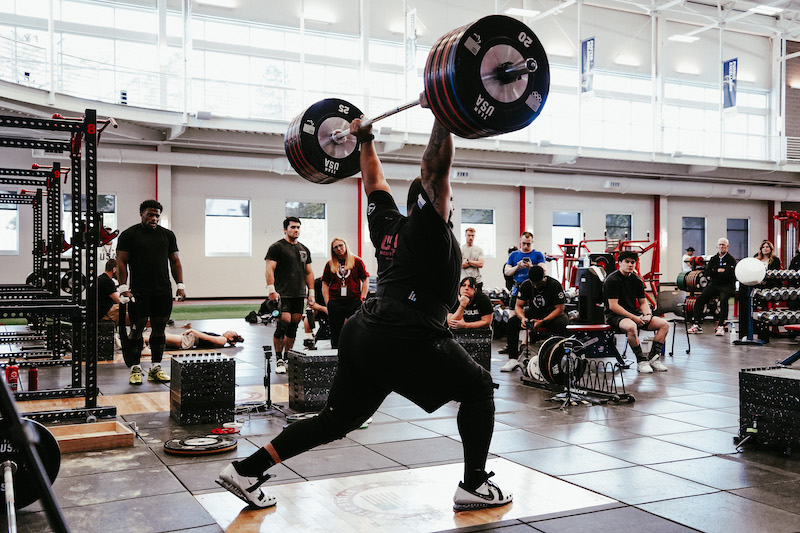
It’s a unique journey for each athlete, but one that takes a team effort to achieve.
“The best part of working at the USOPTC is the athletes themselves,” says Cole Hensley, USOPC, USOPTC Resident Paralympic Swim Coach. “Each has a remarkable story, and having the opportunity to play even a small role in their performance journey is something I am grateful for every day. These athletes teach us so much through their dedication, resilience and pursuit of excellence.”
So does the team behind the team.
“Every employee, regardless of their department or role, has the same goal: to better prepare each athlete and give them the tools and resources they need to make an Olympic or Paralympic roster,” Blatnik says. “It is a collaborative effort where every person plays an important role in helping athletes turn their dream of competing on the Olympic or Paralympic stage into a reality.”
Find all the details and plan your visit to the Olympic and Paralympic Training Center at teamusa.com/visit.


