

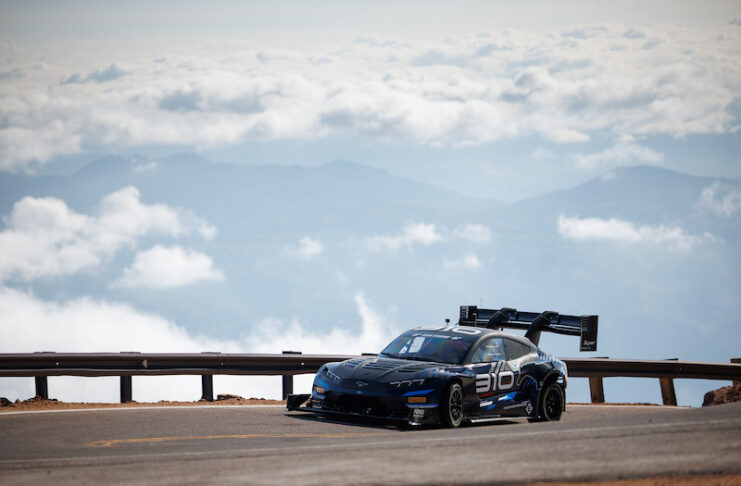
Every year for over a century they return. Men and women and the fastest machines they can muster converge on Colorado Springs to take on America’s Mountain in the Pikes Peak International Hill Climb. The challenge: Navigate the 156 treacherous turns to reach the finish line on the 14,115-foot summit as fast as possible — and stay alive in the process. Some years, records fall. Some years, drivers fall. The danger and unique course are part of the allure of the historic race. For motorheads, racing fans and the city of Colorado Springs, the Hill Climb is a highlight on the summer calendar, from Race Week qualifying to the Friday night downtown Fan Fest to Sunday’s Race Day.
Whether you’re lining up in the predawn hours or just curious about the legendary race, we’ve got you covered with these fun facts, insider tips, drivers to watch and race day viewing tips for the Pikes Peak Hill Climb.
Fun Facts about the Pikes Peak Hill Climb
1. It’s the Second Oldest Race in America
First run in 1916, the Hill Climb is the second-oldest motorsports race in the United States, second only to the Indianapolis 500. The race was paused during World War I and World War II. This year marks the 104th running of the Race to the Clouds.
2. The Course Had Humble Beginnings
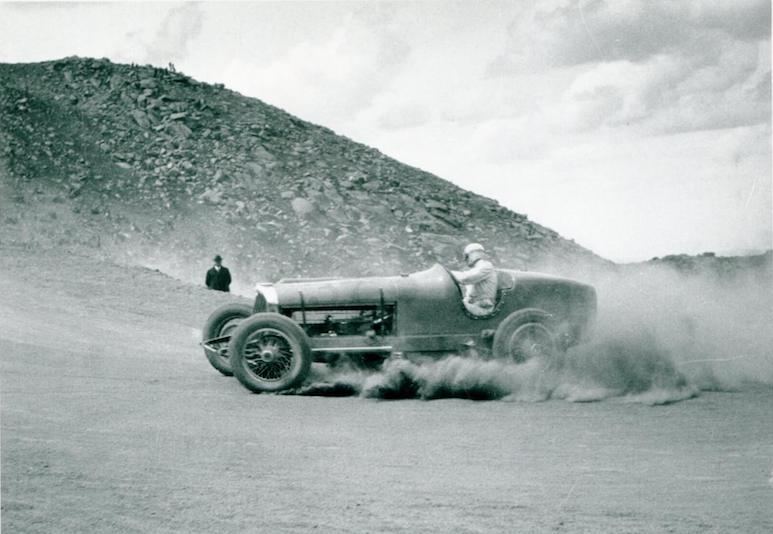
By the 1880s, people were flocking to the Pikes Peak summit by foot and mule. The Pikes Peak Carriage Road opened in 1888, followed by the Cog Railway in 1891. The Carriage Road couldn’t compete with the railroad and closed in 1902. Enter Spencer Penrose who spent $500,000 — equivalent to $15 million today — to widen the road into the Pikes Peak Highway. It was finished in 1915. Well, make that 2011, when the Pikes Peak Highway was finally fully paved. Bye bye rally car drifting. Hello higher-speed precision.
3. The Race Had Ulterior Motives
Leave it to Penrose to create a marketing stunt that has lasted more than a century and become a global icon. He saw the tourist potential of Pikes Peak and launched the Hill Climb in 1916 to promote the new Pikes Peak Highway and attract visitors to his Broadmoor Hotel. Seems like it worked.
4. It’s a Twisty Track
With 156 turns in 12.42 miles, the Pikes Peak Highway is one of the most technically demanding race routes anywhere. Each turn requires precise timing and control, and drivers spend years learning the layout. It’s not only about speed — it’s about mastering the constantly shifting rhythm of corners.
5. It Really Is a Race to the Clouds
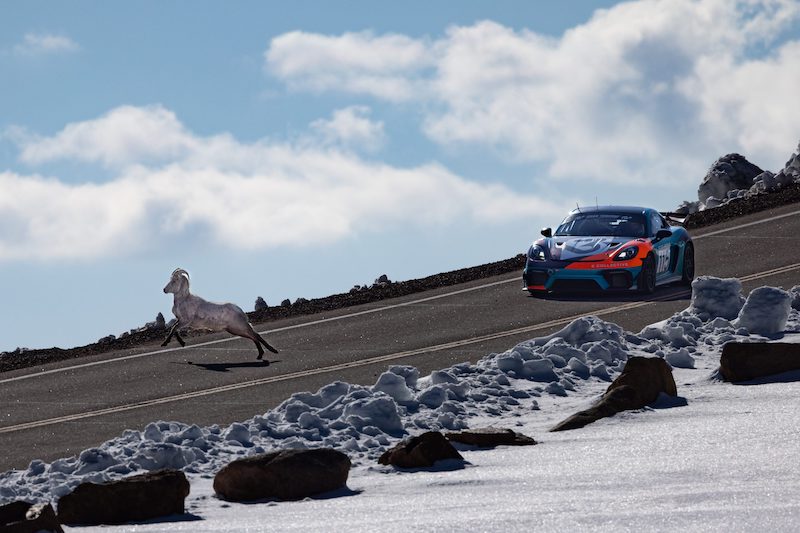
The nickname isn’t just catchy—it’s accurate. Drivers start in forested terrain and climb into alpine conditions where visibility can drop suddenly during a single run. Sun, rain, hail or even snow are always a possibility.
6. Engines Lose Power the Higher You Go
The thinning air of 14,000 feet has a measurable effect. From start to finish, internal combustion engines can lose up to 30% of their power. Just another challenge that has made Pikes Peak an important automotive testing ground — and one reason electric vehicles have started to shine.
7. You Get One Shot at Glory
There are no laps or second chances. Racers go one at a time, racing the clock up that dramatic vertical climb — just one shot, bottom to top as fast as possible.
8. There Are Six Divisions but Only One King of the Mountain
A wide range of vehicles compete in the Hill Climb, classified into the following six divisions. Each division has a winner, but the fastest overall racer is crowned King of the Mountain. Motorcycles are no longer included.
- Unlimited: These exotics can be any and everything, from stock-based models to custom cars built especially for Pikes Peak. These are often the King of the Mountain.
- Time Attack 1: Modified production-based sports cars and specialized race cars, both two- and four-wheel drive.
- Pikes Peak GT4 Trophy by Yokohama: Evenly matched, minimally modified production models.
- Open Wheel: Single-engine, single-seat, open-cockpit traditional race cars, from Indy-style sprinters to dune buggies. Open wheel racers have been here since the beginning in 1916.
- Pikes Peak Open: Stock on the outside, major mods on the inside to engines, transmissions and suspensions. Aerodynamic wings are allowed.
- Exhibition: Prototype or preproduction vehicles designed to advance the sport and automotive engineering.
9. Pikes Is a Proving Ground
Throughout its history, the Hill Climb has helped test and advance automotive innovation for transmissions, braking systems, drivetrains and more. If a car can handle Pikes Peak’s altitude, turns and unpredictable weather, it has proven itself in one of the most demanding environments possible.
10. Records Keep Dropping
The first winning time in 1916 was 20.55.6 minutes by Rea Lentz. Today, the record is 07:57.148, set by Romain Dumas in 2018 driving an electric Volkswagen prototype. Between 1953 and 1962, the course record was broken every year in an unmatched stretch of rapid progress. Sebastien Loeb’s legendary Peugeot run of 8:13.878 in 2013 reset expectations and held the record until Dumas’ electric breakthrough. The dramatic improvements highlight both advances in technology and the serious approach competitors now take to master the mountain.

Best Places to Watch the Pikes Peak Hill Climb
An arena as big as Pikes Peak offers many options, and the best seat in the house depends on what you want to see — and how far you’re willing to go to see it, literally. Here’s where to catch the action, and you can catch Fan Busses to Glen Cove and Devils Playground.
- Pits and Turn 1: Best place to see cars up close and experience prerace energy. You can arrive late (still before 10 a.m.) and leave anytime.
- Halfway Picnic Grounds: See cars at top speed on the longest straightaway.
- Glen Cove: A fast straightaway narrows to a single lane as drivers begin their climb toward tree line. Enjoy access to amenities, like restrooms, at historic Glen Cove Inn.
- Cove Creek: Watch a fast straightaway and sharp left-hand turn at 11,656 feet, plus views of the Ws above tree line.
- Devils Playground: At 12,780 feet, this is where the diehards hang for the highest vantage point and a spectacular, unobstructed view. Just be prepared for high-elevation weather.
- At Home: Want to wake up late and watch from your couch? You can stream the Pikes Peak Hill Climb at racer.com. It’s free; you just have to register with your email.

Get Up Close at Fan Fest
The Friday evening before Race Day is Fan Fest, the popular downtown street festival. You can meet drivers and see the cars up close, and the freestyle motocross show is always a highlight. Read more about it here.
Know Before You Go
- Arrive early — very early. The Pikes Peak Gateway is open 4-5 a.m., and uphill traffic closes at the Start Line at 4:45 a.m.
- Plan to stay all day. Movement on the course is restricted once racing begins, and once you’re past the Pits, you’re not leaving till the end.
- Pack for high altitude and extreme weather changes, even in summer. That means coats, blankets, hats, gloves, sunscreen, water.
- Follow all safety guidelines, especially maintaining safe viewing locations and distances in this live racing environment.
- Buy tickets online in advance. Get them here. They are not sold at the gate.
Get more spectator info here.

Drivers to Watch, Names to Know
There are 75 drivers competing this year, but 2026 might just be a battle of three kings for one crown. Defending King of the Mountain Simone Faggioli, four-time champion Robin Shute and overall record holder Romain Dumas all bring legitimate aspirations of claiming the overall victory. But there are also 16 rookies looking for their coronation. Keep an eye on these racers.
Simone Faggioli — Faggioli Racing Team
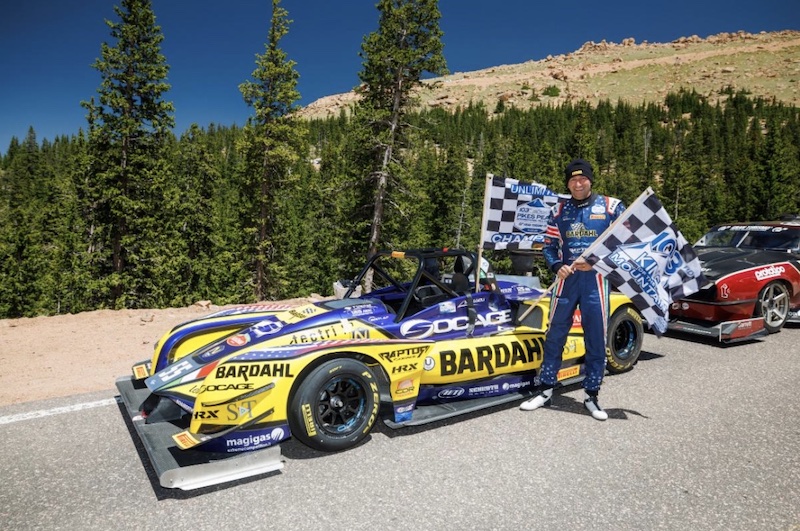
The Italian legend and reigning King of the Mountain will defend his title in his Nova Proto NP01 ATM Bardahl.
Romain Dumas — Ford Performance
The five-time King of the Mountain returns in Ford’s all-electric prototype Super Mustang Mach‑E, aiming to reclaim the top spot after a near-miss in 2025.
Robin Shute — Shute Dynamics
The four-time champion arrives with his fully custom Sendycar V1, built specifically to break records on the mountain.
Laura Hayes — Thunder Bunny Racing
The fastest woman ever up Pikes Peak returns in her division record-setting Toyota Supra GT4 EVO.
Catesby Jones — Alegra Motorsports
This rookie brings an impressive resume and endurance racing cred to the unforgiving Pikes Peak in his BMW M4 GT4 EVO.
Where to Dive Into Pikes Peak Hill Climb History
With more than a century of history, facts and legends, the Pikes Peak International Hill Climb offers a lot to explore. These local Colorado Springs museums offer immersive looks at the unique race.
Penrose Heritage Museum
This is ground zero for Hill Climb history. You’ll find a collection of historic race cars, media and memorabilia at this free museum at The Broadmoor.
Manitou Springs Heritage Museum
This free museum in Manitou has a special Women of the Pikes Peak International Hill Climb exhibit on display through June 2026.
manitouspringsheritagecenter.org


